Grocery shopping is getting a serious tech upgrade, and this time it is not another app asking you to remember a password you definitely forgot. Weis Markets has launched Instacart’s AI-powered Caper Carts at select Pennsylvania locations, with more rollouts planned throughout 2026. The move brings smart shopping carts into the physical grocery aisle, combining computer vision, location-aware offers, loyalty rewards, and real-time budgeting in one connected cart. [PR Newswire]
For shoppers, this means fewer surprises at checkout. For retailers, it signals something much bigger: grocery stores are becoming data-driven, AI-enhanced environments where the cart is no longer just a metal basket with wheels. It is becoming a digital shopping assistant.
What Are Instacart Caper Carts?
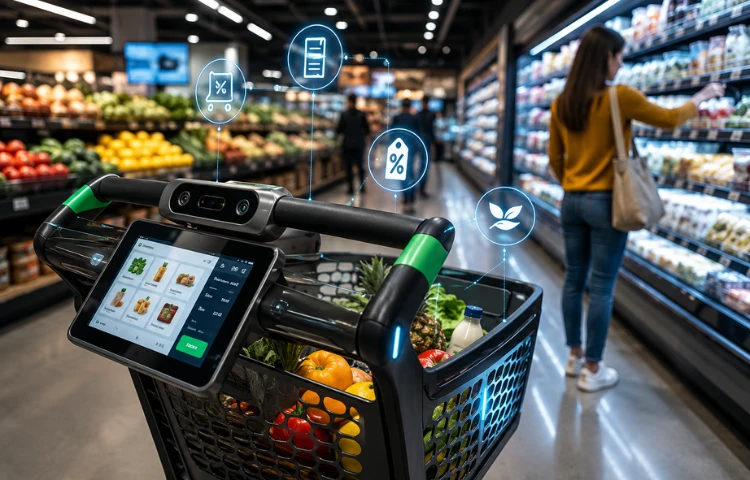
Instacart’s Caper Carts are AI-powered smart carts designed to make in-store shopping faster, more personalized, and more interactive. According to Instacart’s announcement, the carts include basket-facing camera sensors, certified scales, location-tracking systems, outward-facing cameras, and touchscreen displays. These features allow the cart to recognize items, track spending, surface coupons, and support loyalty benefits while customers shop.
The technology is part of Instacart’s broader Connected Stores strategy, which aims to merge online grocery intelligence with physical retail. Instacart has described this as “Physical AI,” where edge computing on the cart works with cloud AI trained on more than 1.6 billion online grocery orders. That gives the system the ability to support real-time decisions inside the store, from product recognition to personalized recommendations.
Why Weis Markets Is Adopting AI-Powered Shopping Carts
Weis Markets, a Mid-Atlantic grocery retailer founded in 1912, operates 197 stores across Pennsylvania, Maryland, Delaware, New Jersey, New York, West Virginia, and Virginia. Its partnership with Instacart builds on an existing relationship: Weis joined the Instacart Marketplace in 2023, and Caper Carts now extend that digital partnership into physical stores.
The customer-facing value is straightforward. Shoppers can see their running total as they shop, clip on-cart digital coupons, sign up for Weis Rewards directly on the cart, and redeem loyalty benefits without bouncing between a phone, paper coupons, and the checkout lane. Weis Rewards members who link their account can also use Buy It Again, a feature that surfaces previously purchased products to help shoppers rebuild baskets more efficiently.
That may sound simple, but it solves a real grocery pain point: uncertainty. When prices fluctuate, promotions are scattered across apps, and grocery bills keep climbing, real-time spend tracking gives shoppers more control before they reach checkout.
The Bigger Retail Trend: Grocery Stores Are Becoming Smarter
This rollout is not happening in isolation. Instacart has been expanding Caper Carts across more than 100 cities in 15 states, with deployments across more than a dozen retail banners, including Kroger, Schnucks, and Wakefern banners such as ShopRite and Fairway Market. Instacart also said it has tripled Caper Cart deployments year over year.
The grocery industry has been under pressure to improve both the customer experience and store operations. AI-powered carts sit right at that intersection. They help shoppers track costs and find savings, while also giving retailers better insight into store movement, product engagement, shelf conditions, and basket-building behavior.
Instacart’s broader AI roadmap also includes Cart Assistant, an AI shopping companion designed for meal planning, budgeting, nutrition support, and personalized recommendations across online and in-store experiences. The company has positioned these tools as enterprise AI solutions for grocers that want to compete in an AI-first retail environment.
Retail Media Comes to the Shopping Cart
One of the most important parts of the Weis Markets rollout is not just convenience. It is advertising.
Weis plans to launch on-cart advertising through Caper Carts, giving brands a new way to reach shoppers during the actual shopping trip. Instacart says prompts such as “Got everything you need?” have shown early evidence of influencing purchase behavior, including a nearly one-percentage-point average lift in basket size.
That matters because retail media has become one of the fastest-growing opportunities in commerce. Instead of showing ads only before the shopping trip, smart carts can deliver offers at the moment of decision. Imagine walking through the pasta aisle and seeing a coupon for sauce, or adding coffee and receiving a timely offer for creamer. Useful? Potentially. A little too good at knowing snack habits? Also potentially. The key will be transparency and relevance.
Privacy, Trust, and the Ethics of AI in Grocery
AI-powered carts can make shopping smoother, but they also raise reasonable questions. The carts use cameras, sensors, scales, and location-aware systems. That makes it essential for retailers to communicate clearly about what data is collected, how it is used, and how shoppers can make informed choices.
This is where ethical AI matters. Customers may welcome real-time discounts and easier checkout, but trust can disappear quickly if personalization feels invasive. Grocers adopting smart cart technology should prioritize clear signage, accessible privacy policies, opt-in loyalty features, and responsible data governance.
Instacart’s AI strategy emphasizes combining in-store and online data to create more personalized shopping experiences and operational insights. That can benefit shoppers through better savings and product availability, but it also makes transparency a business requirement, not a nice-to-have.
What This Means for Shoppers
For everyday customers, the biggest benefits are practical:
You can track your grocery bill while shopping, clip relevant coupons from the cart screen, use loyalty rewards more easily, and potentially avoid some checkout friction. For budget-conscious families, the real-time total may be the killer feature. For busy shoppers, “Buy It Again” can reduce the mental load of rebuilding weekly grocery lists.
The experience may not be perfect immediately. Smart cart adoption depends on store layout, item recognition accuracy, shopper comfort, cart availability, and how intuitive the interface feels. But the direction is clear: the grocery cart is becoming a connected device.
What This Means for Retailers
For retailers, AI-powered shopping carts offer three major opportunities.
First, they can improve customer experience by reducing friction and adding useful personalization. Second, they can create operational insights, especially when connected to shelf intelligence and inventory systems. Third, they open new retail media revenue streams through in-store advertising and targeted promotions.
Instacart’s enterprise AI solutions also point toward a future where carts, shelves, e-commerce platforms, loyalty systems, and AI assistants work together. That creates a more unified grocery experience, where online preferences can inform in-store discovery and in-store behavior can improve digital recommendations.
Final Takeaway
The Weis Markets and Instacart Caper Cart rollout is more than a shiny retail experiment. It is a sign that grocery shopping is moving into a new phase where AI-powered shopping carts, loyalty data, real-time promotions, and in-store intelligence work together to make physical stores more digital.
For shoppers, the promise is convenience, savings, and better control over spending. For retailers, it is a path toward smarter stores, stronger customer engagement, and new revenue opportunities. The winners will be the grocers that make the technology feel helpful rather than intrusive.
In other words: the humble shopping cart just got promoted. It now has cameras, coupons, AI, and probably a better memory than most of us in the cereal aisle.