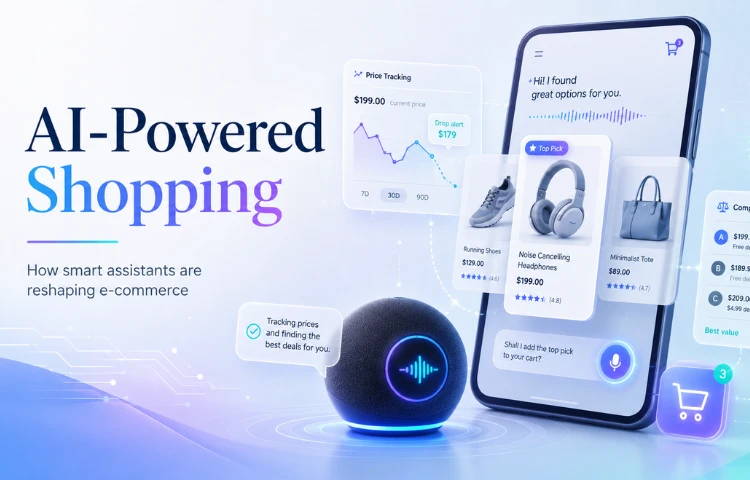
Amazon is making a major move in AI-powered shopping, and this one is bigger than a chatbot with a checkout button. The company has introduced Alexa for Shopping, an AI shopping assistant powered by Alexa+ that brings together Amazon’s product intelligence, user shopping history, and conversational context across the Amazon app, Amazon.com, and Echo Show devices. In plain English: Amazon wants Alexa to become less of a voice assistant and more of a personal shopping operator. Helpful? Potentially. A little Black Mirror with a coupon code? Also potentially.
According to Amazon’s official announcement, Alexa for Shopping allows customers to ask questions directly in the main Amazon search bar, generate personalized shopping guides, compare products, see AI overviews, view up to a year of price history, and automate routine shopping actions such as restocking household items or tracking price drops. The feature is available to U.S. customers on the Amazon Shopping app, Amazon website, and Echo Show devices, with no Prime membership or Echo device required for app and web access. [About Amazon]
From Rufus to Alexa for Shopping: Why Amazon Is Rebranding the AI Shopping Experience
Amazon’s previous AI shopping assistant, Rufus, was already designed to answer product questions and help users browse. But the new Alexa for Shopping strategy signals something more ambitious: Amazon is folding conversational shopping into the broader Alexa+ ecosystem. Axios reported that Amazon is enhancing Alexa+ with Rufus capabilities to create a more persistent, cross-device shopping experience where conversations can continue across Amazon’s app, website, and Echo devices. [Axios]
That continuity is the big story. Traditional e-commerce asks shoppers to search, filter, compare, review, abandon cart, return three days later, forget what they were doing, and start over. Alexa for Shopping is designed to remember context. For example, a user could discuss a school science project with Alexa on an Echo device, then later ask Amazon’s app to suggest supplies for that project. Amazon says Alexa can use prior conversations and shopping activity to make those recommendations more relevant.
The Key Features: Search, Compare, Track, Automate
The most important update is that Alexa for Shopping now sits inside the main Amazon search bar. That matters because users do not need to hunt for a separate chatbot. They can type natural questions like “What is the best laptop for a college student under $800?” or “Compare Kindles” and receive conversational, AI-generated guidance. Amazon says the assistant can also answer order-related questions such as when a customer last ordered a specific item.
The second big feature is dynamic product comparison. Instead of opening ten tabs and building a spreadsheet like it is tax season for headphones, shoppers can select multiple products and ask Alexa to compare features, prices, and reviews side by side. That makes product discovery faster and potentially less frustrating.
The fourth feature is where things get especially interesting: Scheduled Actions. Amazon says shoppers can ask Alexa to perform routine tasks, such as adding household staples to a cart monthly, tracking price drops, or reminding them to buy gifts before birthdays. A user could even set a conditional prompt like adding sunscreen to the cart only if it drops below a certain price and has not been purchased recently.
Why This Matters for Retailers: Agentic Commerce Is Arriving
This is not just an Amazon story. It is part of the rise of agentic commerce, where AI agents help users discover, compare, and eventually purchase products based on goals, preferences, and constraints. IBM defines agentic AI as systems that can accomplish specific goals with limited supervision, often using decision-making and orchestration to complete tasks.
BCG has also described agentic commerce as a major shift in how shopping will work, arguing that AI shopping agents will change how consumers discover products and how retailers compete for visibility. In this new model, brands may no longer optimize only for human shoppers; they will also need to optimize for AI agents that evaluate product data, reviews, prices, availability, delivery promises, and trust signals.
Amazon’s move also follows a broader industry pattern. Reuters reported that Alibaba is integrating its Qwen AI platform with Taobao to support AI-driven shopping experiences, including product browsing, comparison, and purchasing through conversational agents. That shows the race is not limited to Western e-commerce platforms. [Reuters]
For businesses, this means product data quality is no longer boring backend plumbing. It is the new shelf space. Clean descriptions, accurate specs, transparent pricing, reliable inventory data, clear return policies, and strong customer reviews will matter even more when AI agents become the front door to purchase decisions. Amazon Web Services made a similar point in its retail AI shopping agents blog, noting that many e-commerce systems were built for human browsing and search engines, not for AI agents that need structured, semantically rich product information.
The Consumer Upside: Less Friction, Smarter Decisions
For shoppers, Alexa for Shopping could reduce the mental load of buying. Instead of manually comparing products, checking price history, reading endless reviews, and remembering to reorder dog food before the dog stages a protest, users can delegate some of that work.
This could be especially useful for complex or recurring purchases: electronics, baby products, school supplies, household essentials, pet food, gifts, and seasonal items. It also makes shopping more conversational. Nielsen Norman Group has noted that AI chat and search can help users describe information needs without relying on exact keywords, although many users still need clearer guidance on what AI tools can do.
That usability point is important. Alexa for Shopping will only succeed if users understand when to use it and trust the results. If it feels like a helpful expert, great. If it feels like a sponsored slot machine wearing a friendly sweater, not so great.
The Trust Question: Personalization Needs Guardrails
The most powerful part of Alexa for Shopping is also the most sensitive: personalization. Amazon says the assistant can use shopping history, conversations, and device context to deliver more relevant recommendations.
That creates clear benefits, but it also raises important questions. How much context should an AI shopping assistant retain? How transparent should it be about why it recommends a product? How should users control automated actions? What happens when an AI agent adds the wrong item, chooses a pricier product, or over-optimizes for convenience instead of value?
For Amazon, the challenge is to make automation feel controlled, not creepy. Users need clear permissions, visible price logic, easy cancellation, and confidence that Alexa is acting in their interest. In AI shopping, trust is not a bonus feature. It is the checkout button.
What Marketers and Retail Leaders Should Do Next
Retailers should treat Amazon’s Alexa for Shopping launch as a preview of where digital commerce is headed. AI assistants will increasingly mediate discovery, comparison, and conversion. That means businesses need to prepare content and commerce systems for both humans and agents.
Start with product content. Make sure specifications are structured, complete, and consistent. Strengthen review quality. Improve FAQs. Clarify return policies. Keep inventory and pricing accurate. Build content that answers real buyer questions, not just SEO keyword variations from 2014.
Final Takeaway: Alexa Is Becoming the Storefront
Amazon pushing Alexa+ deeper into AI-powered shopping is more than a product update. It is a signal that the future of e-commerce will be conversational, personalized, and increasingly agent-driven. Search bars are becoming assistants. Assistants are becoming shoppers. And shoppers are becoming supervisors of AI-powered buying journeys.
For consumers, that could mean faster decisions and better deals. For retailers, it means competing in a world where AI agents may decide which products get surfaced first. For Amazon, it is a chance to make Alexa central again—not just as a voice in the kitchen, but as the brain of the shopping journey.