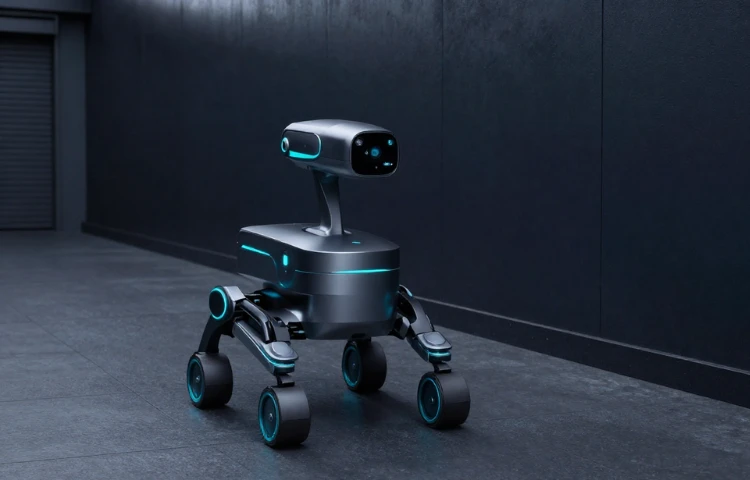
Industrial AI has spent years living in dashboards, alerts, and slide decks. Now it is getting legs, literally. The collaboration between SAP and Swiss robotics company ANYbotics is a clean signal that SAP and ANYbotics drive industrial adoption of physical AI by wiring autonomous inspection robots directly into the same enterprise workflows that run maintenance, assets, and field operations. The result is simple to explain and hard to ignore: robot findings no longer sit in a separate tool, they trigger real work inside SAP systems. [SAP News Center]
Physical AI moves from novelty to workflow
Physical AI is the shift from AI that only analyzes information to AI that perceives the real world through sensors and acts through machines under real constraints like latency, safety, and reliability. The International Federation of Robotics describes physical AI as a path where robots learn in virtual environments and operate by experience rather than being programmed for every edge case.
This framing matters for industrial operations because plants are messy: noisy, dusty, reflective, and full of exceptions. In that setting, value comes from systems that can repeat inspections reliably, capture consistent data, and push outcomes into the system of record with minimal friction.
The SAP and ANYbotics playbook: robots as ERP native coworkers
SAP’s feature on the partnership makes the strategic move clear: many plant operators and maintenance teams already live inside SAP for work orders, asset history, and operational decisions. ANYbotics decided its robot output had to land inside those same flows.
Here is the key integration pattern described by SAP:
- Dispatch and execution through SAP Field Service Management so a robot can receive work orders like a human technician, run autonomous inspection routes, collect sensor data, and send results back into SAP.
- Project Embodied AI on the SAP side to connect AI agents and business context to physical operations, while ANYbotics retains control over robot behavior and inspection execution.
- A continuous digital thread that connects inspection insights to SAP data so teams can move from detection to decision without rekeying or manual reporting.
- Offline tolerance so the robot remains autonomous even with limited connectivity, a real constraint in heavy industrial environments.
That last point is a big deal. Plants and offshore platforms are not friendly to perfect Wi Fi. Any approach that assumes always on cloud streaming tends to meet reality and lose.
Industrial ROI: faster detection, less lag, fewer risky trips
The ArtificialIntelligence News coverage explains the operational win in plain terms: inspections often happen, then reporting happens later, then work orders happen later still. Closing that lag turns anomalies into immediate action, especially when sensor readings can map into maintenance workflows. [AI News]
SAP also highlights a concrete outcome from an offshore wind context: an ANYmal deployment enabled inspections without sending personnel to a remote platform for months, and when human work was eventually required, prior robot data helped teams arrive prepared with the right expert and equipment.
Edge compute, data governance, and security: the unglamorous heroes
Physical AI only scales when the plumbing is solid.
The ArtificialIntelligence News article points to edge computing as a practical necessity because high bandwidth sensor streams are expensive to move and fragile in harsh environments. It also flags private 5G as an option some adopters use for coverage and control, plus the need for strict access controls since mobile robots with cameras can expand the attack surface.
Change management: adoption is a people project
Robots can trigger workforce anxiety fast. SAP notes that embedding ANYmal directly into familiar SAP workflows can reduce friction because the robot fits the process people already know rather than forcing a brand new toolchain.
A practical adoption pattern that works well in heavy industry:
- Start with high risk, repetitive inspection routes
- Prove data quality and false alert controls
- Integrate into work order flows early
- Keep humans in the loop with clear escalation rules
- Expand site by site with standardized templates and governance
Market momentum: the timing is not accidental
Deloitte’s March 18, 2026 perspective argues physical AI is moving into practical business reality, driven by more capable hardware and software that learns. Deloitte also reports a jump in the share of firms expecting physical AI to transform their organization within three years, and it highlights cost and resourcing as a leading barrier. [Deloitte]
Strategy and PwC frames physical AI as intelligence moving beyond the screen and projects a global market potential around €430 billion by 2030, with adoption moving from early pilots toward scaled deployment over the next several years.
Conclusion
SAP and ANYbotics are pushing physical AI past the pilot phase by connecting autonomous inspection directly to enterprise workflows. When robots can capture consistent field data, detect anomalies, and automatically trigger maintenance actions inside existing systems, adoption becomes far easier and value shows up faster. The real unlock is not the robot alone, it is the end to end loop from sensing to decision to action, supported by edge readiness, security controls, and clear escalation rules for humans in the loop. As more organizations standardize this workflow first approach, physical AI shifts from a nice demo to a dependable part of industrial operations, improving safety, reducing downtime, and turning inspections into always on operational intelligence.