The 2026 Consumer Electronics Show (CES) in Las Vegas lived up to its reputation as the world’s most influential tech event, but this year, the spotlight shifted dramatically from screens and apps to embodied intelligence — artificial intelligence literally stepping off the screen and into the real world. From humanoid robots strutting on the exhibition floor to AI platforms redefining physical automation, CES‑2026 was a Vegas jackpot for AI and robotics enthusiasts, signaling what many analysts now dub the “Physical AI era.” [Korea Times]
AI Goes Physical: Beyond Virtual Algorithms
For years, AI breakthroughs were measured in software benchmarks: language understanding, image generation, and recommendation quality. At CES 2026, those virtual achievements took a backseat as AI‑driven machines began to interact with the physical world. This shift — from digital outputs to embodied intelligence — represents a paradigm shift where AI isn’t just smart in the cloud — it’s smart in your home, your workplace, and on factory floors. [euronews]
Major keynote presentations by AI and chip leaders underscored this evolution. Nvidia’s CEO Jensen Huang, for instance, emphasized how AI investments are not just about software anymore — they are now foundational to industrial‑scale automation and robotics. [ctech]
Humanoids Take Center Stage
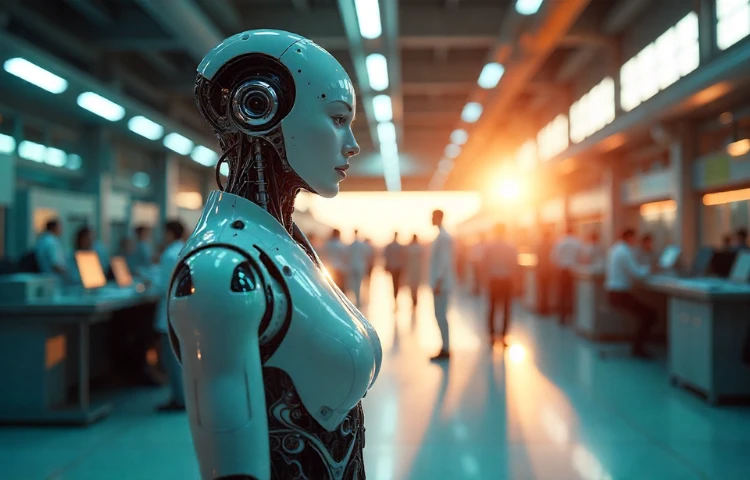
One of the most eye‑catching themes at CES 2026 was the prominence of humanoid robots — machines designed to look or move like humans, powered by advanced AI stacks capable of perception, language understanding, and decision‑making.
Atlas: The New Age of Robot Mobility
Boston Dynamics, backed by Hyundai Motor Group, unveiled its latest iteration of Atlas, a fully electric humanoid robot demonstrated to walk, wave, and interact dynamically with its environment at CES. Designed for manufacturing tasks and human‑robot collaborative workflows, Atlas demonstrates how far humanoid robotics have come from pure demos to industrial readiness. [AP News]
Commercial and Consumer Humanoids
The buzz wasn’t limited to industrial bots. Multiple vendors unveiled humanoid machines aimed right at household tasks and everyday assistance:
- SwitchBot Onero H1 — A versatile home assistant capable of chores like making coffee and folding laundry. [The Verge]
- LG’s CLOiD — A home robot part of a “zero labor home” vision that integrates deeply with smart appliances.
Consumer humanoids like these show the convergence of traditional home automation with AI‑driven robotics and hint at the future of robotic assistants in daily life. If you’re interested in where these technologies could fit into your home or business.
AI + Robotics Partnerships Rewrite Innovation Playbooks
CES highlighted that physical AI isn’t just about hardware — it’s about systems and partnerships:
- Google DeepMind + Boston Dynamics: Integrating the Gemini AI model into humanoids like Atlas and Spot for enhanced contextual awareness. [WIRED]
- Mobileye’s acquisition of Mentee Robotics for nearly $900 million — a strategic move bridging autonomous vehicle AI and humanoid technologies. [Reuters]
These collaborations underscore a broader trend: AI companies and robotics firms are forming ecosystems where language models, perception systems, and physical machines co‑develop — accelerating innovation far beyond siloed R&D.
Challenges and Ethical Considerations
Despite scintillating demos and commercial potential, humanoid robotics still faces significant challenges:
- Dexterity and adaptiveness: Household environments are incredibly unstructured, and many robots still struggle with tasks that humans find trivial. [PYMNTS.com]
- Ethical implications: Questions around workforce displacement, safety standards, and privacy will only grow as humanoids move into workplaces and homes.
Conclusion: The Physical AI Frontier
What makes CES 2026 truly remarkable isn’t just flashy gadgetry — it’s the clear trajectory toward physical machines powered by intelligent systems that can think, perceive, and act in the real world. This year’s Vegas jackpot wasn’t jackpots at all — it was proof that AI is no longer confined to screens but is set to reshape how we live, work, and interact with machines.